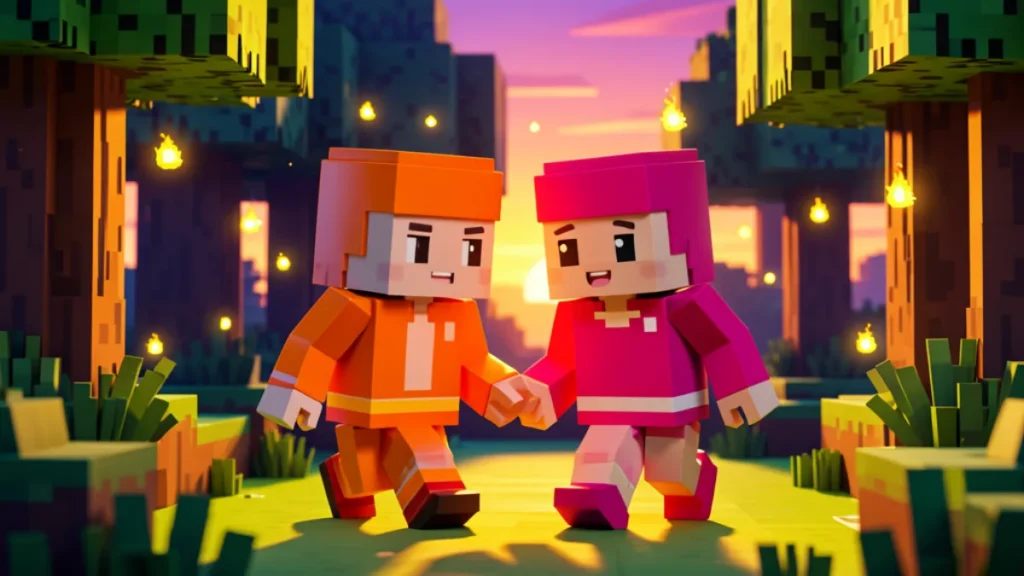
Building a world together with friends is one of the most enjoyable parts of Minecraft, whether that means surviving the first night as a team or designing an enormous shared city. A few simple habits can make playing together smoother and safer for everyone involved.
Set Up a Shared World the Right Way
Before inviting friends into a world, it helps to agree on a few basics together: who can build where, whether griefing or destroying others’ builds is allowed, and how resources will be shared. Setting these expectations early avoids most disagreements before they start and keeps the shared world enjoyable for the whole group.
Invite the Right People
The safest multiplayer sessions happen with people already known in real life, such as friends, siblings, or cousins. When using shared realms or private servers, keeping the invite list limited to trusted people helps maintain a calm, friendly environment where everyone feels comfortable building and exploring together.
Divide Tasks for Bigger Projects
Large group builds go much smoother when tasks are divided up. A few examples of how a group might split the work:
- One player gathers resources while others focus on building
- Different players take charge of separate sections of a build
- One player designs the overall layout before construction begins
- Someone keeps track of shared supplies like torches and food
Keep Communication Friendly
Clear, kind communication keeps group sessions fun rather than frustrating. Celebrating good ideas, being patient with slower builders, and stepping away calmly if a disagreement starts to heat up all help a group stay together for the long run instead of falling apart after one rough session.
Celebrate Progress Together. Taking a screenshot of a finished project, giving a quick tour of a completed section, or simply thanking teammates for their help are small habits that make group building feel rewarding. Groups that regularly celebrate their progress, even in small ways, tend to keep playing together far longer than groups who only focus on what still needs to be built.
Keep the Shared World Healthy Long-Term. Large shared worlds last longest when the group revisits its rules every so often, backs up important builds, and welcomes new members carefully rather than all at once. A shared world that grows slowly, with everyone comfortable with each new addition, tends to stay fun and organized for months rather than falling apart after the first few weeks. A quick group chat every so often about what to build next keeps everyone excited to log back in together and keeps the shared project feeling like a team effort rather than a chore.
This guide is an independent fan resource and is not affiliated with, endorsed by, or sponsored by Mojang Studios. Visit minecraft.net for official information.